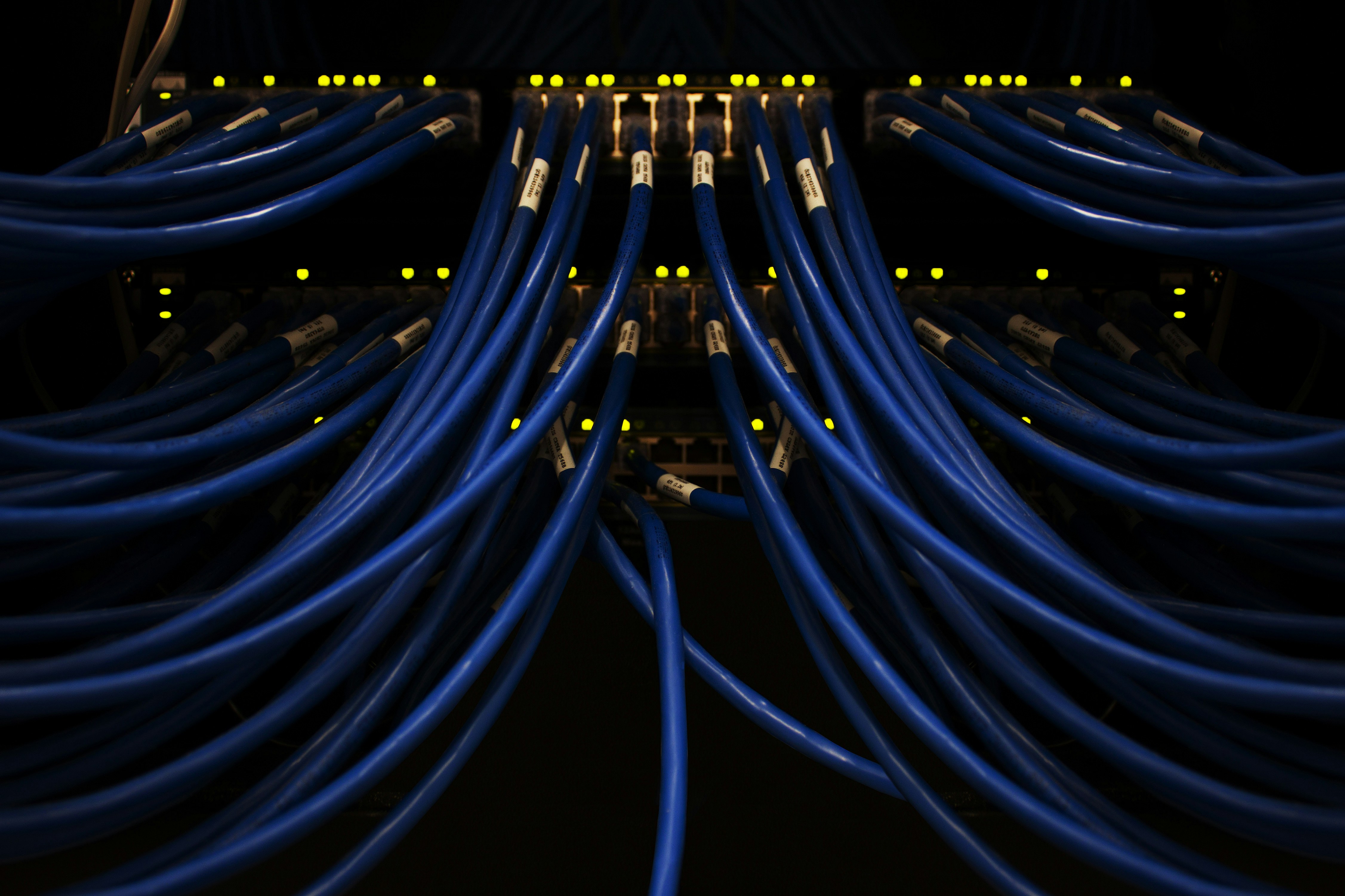
For years, the default infrastructure strategy was simple: buy a rack, fill it with Dell servers, install VMware, and call it a day. That world is now a museum piece. The modern enterprise doesn't have an infrastructure; it has a living, breathing, distributed nervous system spanning on-premises hardware, multiple public clouds, edge locations, and SaaS sprawl.
So, what does best-in-class IT infrastructure look like right now? It’s not a single product. It’s a philosophy built on six strategic layers.
1. The Hyperscale Trinity: Why One Cloud is a Liability
For a decade, the pitch was "Cloud First." Then came the AWS bill that looked like a phone number, and suddenly the pitch became "Cloud Smart."
Today, the gold standard is the Strategic Multi-Cloud. No enterprise betting its future on a single provider is sleeping soundly.
AWS remains the market gorilla—unmatched breadth of services, the deepest array of compute options (Graviton chips, Trainium for AI).
Microsoft Azure owns the enterprise stack. If your business runs on Active Directory, Office 365, and Dynamics, Azure is not an option; it's gravity. The seamless integration between on-prem Windows Server and Entra ID (Azure AD) is the most defensible moat in the industry.
Google Cloud has become the dark horse for data. BigQuery, Anthos, and their leadership in Kubernetes-native operations make them the home for analytics and containerized workloads.
The winning playbook: Place your latency-sensitive, steady-state workloads in a colocation data center or private cloud. Run your M365 and identity on Azure. Run your customer-facing microservices on AWS. Run your machine learning pipelines on GCP. Tie them together with a low-latency interconnect (like Equinix Fabric or Megaport). This isn't redundancy; it's leverage.
2. The End of VMware’s Monopoly: Welcome to the Hypervisor War
The Broadcom acquisition of VMware was the infrastructure earthquake of 2024. Overnight, licensing costs skyrocketed, and the "perpetual license" became a fairy tale.
This forced a massive, industry-wide exodus. Businesses are now aggressively evaluating VMware alternatives, and three contenders are leading the pack:
Proxmox VE: The open-source dark horse. It pairs KVM hypervisor with LXC containers, has a built-in backup server, and lacks the licensing quicksand. For SMBs and mid-market enterprises tired of being nickel-and-dimed, Proxmox is having its Linux moment.
Nutanix AHV: The enterprise darling. If you want the "VMware experience" (vMotion-like live migration, centralized management, stellar support) without the VMware price tag, Nutanix Acropolis is the cleanest off-ramp.
Microsoft Hyper-V / Azure Stack HCI: For Windows-heavy shops, this is the path of least resistance. Hybrid services like Azure Arc extend governance, patching, and security policies from Azure into your on-prem Hyper-V hosts.
The takeaway: The era of the default hypervisor is dead. Infrastructure portability is the new imperative. Build your stack so that moving a VM from VMware to KVM is a Tuesday script, not a six-month migration project.
3. Zero Trust is Not a Product; It’s the Architecture
The old castle-and-moat model—firewall at the perimeter, trusted users inside—died the moment COVID-19 sent everyone home. In 2026, the network perimeter is a coffee shop Wi-Fi in Dubai and a home office in London.
Zero Trust Network Access (ZTNA) has replaced the VPN. Solutions like Zscaler, Cloudflare One, and Twingate do not connect users to the network; they connect authorized users to specific applications through encrypted, micro-tunnels. A compromised endpoint on a home network should be a non-event, not a gateway to your domain controller.
Furthermore, Micro-segmentation (via tools like Illumio or VMware NSX, if you’re still on that train) is now table stakes. East-west traffic inside your data center must be locked down. Your HR server has no business talking to your point-of-sale system, and your firewall rules should reflect that granularly.
4. The Storage Disruption: Goodbye SAN, Hello HCI (and NVMe)
For thirty years, the enterprise storage recipe was identical: a massive, dual-controller Storage Area Network (SAN) from Dell EMC or Pure Storage, connected to a compute farm via Fibre Channel switches. It was stable. It was expensive. It was a bottleneck.
Hyperconverged Infrastructure (HCI) has matured. Nutanix, Dell VxRail, and Cisco HyperFlex collapse compute, storage, and network into a box of x86 nodes. The real game-changer, however, is software-defined storage.
Ceph and MinIO are allowing enterprises to build petabyte-scale, S3-compatible storage lakes on commodity hardware.
NVMe over Fabrics (NVMe-oF) is making storage latency so low that disaggregating storage from compute is no longer a performance sin.
For businesses running AI/ML workloads, the conversation is no longer about capacity (terabytes); it’s about throughput (GB/s). Your storage layer must feed GPUs data faster than they can process it. Legacy spinning disk SANs are a starvation diet for an NVIDIA H100.
5. The AI Infrastructure Tax
You can't read a CIO agenda today without a section on AI. But running Large Language Models (LLMs) introduces infrastructure pressures that traditional IT has never faced.
Power and Cooling: A rack of standard servers draws 5-10kW. A rack of NVIDIA DGX H100s can draw 80kW. Most corporate data centers cannot cool this without direct-to-chip liquid cooling. The "AI Factory" will live in specialized colocation facilities (like Digital Realty or CyrusOne) designed for this density, not in your corporate broom closet.
Inferencing at the Edge: Not every AI call needs an H100. For production workloads, enterprises are deploying smaller, fine-tuned models (LLaMA, Mistral) on NVIDIA L40S GPUs or even high-end CPUs with AI accelerators (Intel AMX). This keeps sensitive data local and latency down.
6. Infrastructure as Code is No Longer Optional
If an engineer can manually SSH into a server to fix a load balancer configuration, that infrastructure is already broken. Immutable infrastructure—where you never patch a server, you just deploy a brand new one from a golden image—is the new standard.
Terraform (or OpenTofu) and Ansible aren't tools for "DevOps teams" anymore. They're the configuration grammar of the business. Paired with GitOps practices (ArgoCD for Kubernetes, for example), the desired state of your infrastructure lives in a Git repository, and the cluster auto-reconciles itself to that truth.
The definition of disaster recovery has changed. It's no longer "We can restore from backup within 24 hours." It's "We can redeploy the entire production environment to a different region (or different cloud) with a single merge request."
The Bottom Line
The best IT infrastructure of 2026 is invisible to the user, hostile to attackers, and fluid to the administrator. It is not defined by the brand of servers in the basement, but by the software layer that orchestrates them.
Stop chasing shiny hardware. Start building an architecture that treats your data center, your three cloud accounts, and your edge locations as a single, coherent computer. Because if your infrastructure feels like a collection of disconnected parts, that’s exactly how it will break.